
One letter a month.
No noise, ever.
Notes on voice, judgement and the craft of being understood — written for partners,editors and leaders who work in words. Forty-seven issues in; the occasional reply thread is the bestpart.
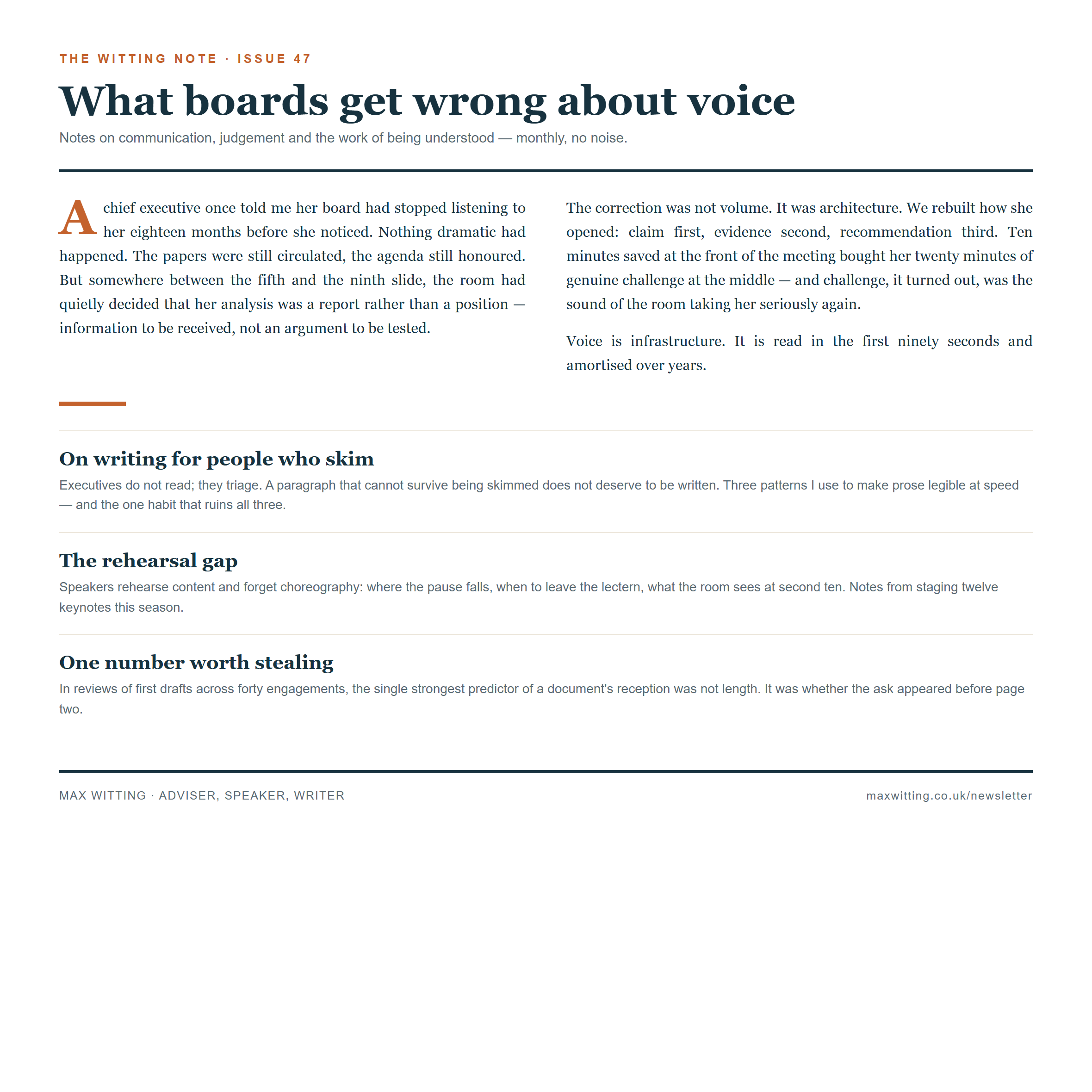
What boards get wrong about voice
A chief executive once told me her board had stopped listening to her eighteenmonths before she noticed. Nothing dramatic had happened. The papers were still circulated, the agendastill honoured. But somewhere between the fifth and the ninth slide, the room had quietly decided thather analysis was a report rather than a position — information to be received, not an argument to betested.
The correction was not volume. It was architecture. We rebuilt how she opened: claim first, evidencesecond, recommendation third. Ten minutes saved at the front of the meeting bought her twenty minutes ofgenuine challenge at the middle — and challenge, it turned out, was the sound of the room taking herseriously again.
Each issue carries one argued essay like that one, two shorter notes, and one number worth stealing.Back issues are not archived publicly — subscribers keep them, which keeps the writing honest.
What arrives, exactly
One argued essay
The kind that starts in a boardroom and ends somewhere it did not expect.Roughly eight hundred words, no padding.
Two shorter notes
From the staging room, the margin, or the walk. The connective tissue ofthe practice.
One number worth stealing
A figure from the month's work that changes how a sentence gets written.Anonymised, always.
The print-style one-pagers.
Two documents clients most often forward: the speaking portfoliosampler for programme committees, and the engagement overview for new advisory clients. Both travel asPDF; both are kept to one argued page.
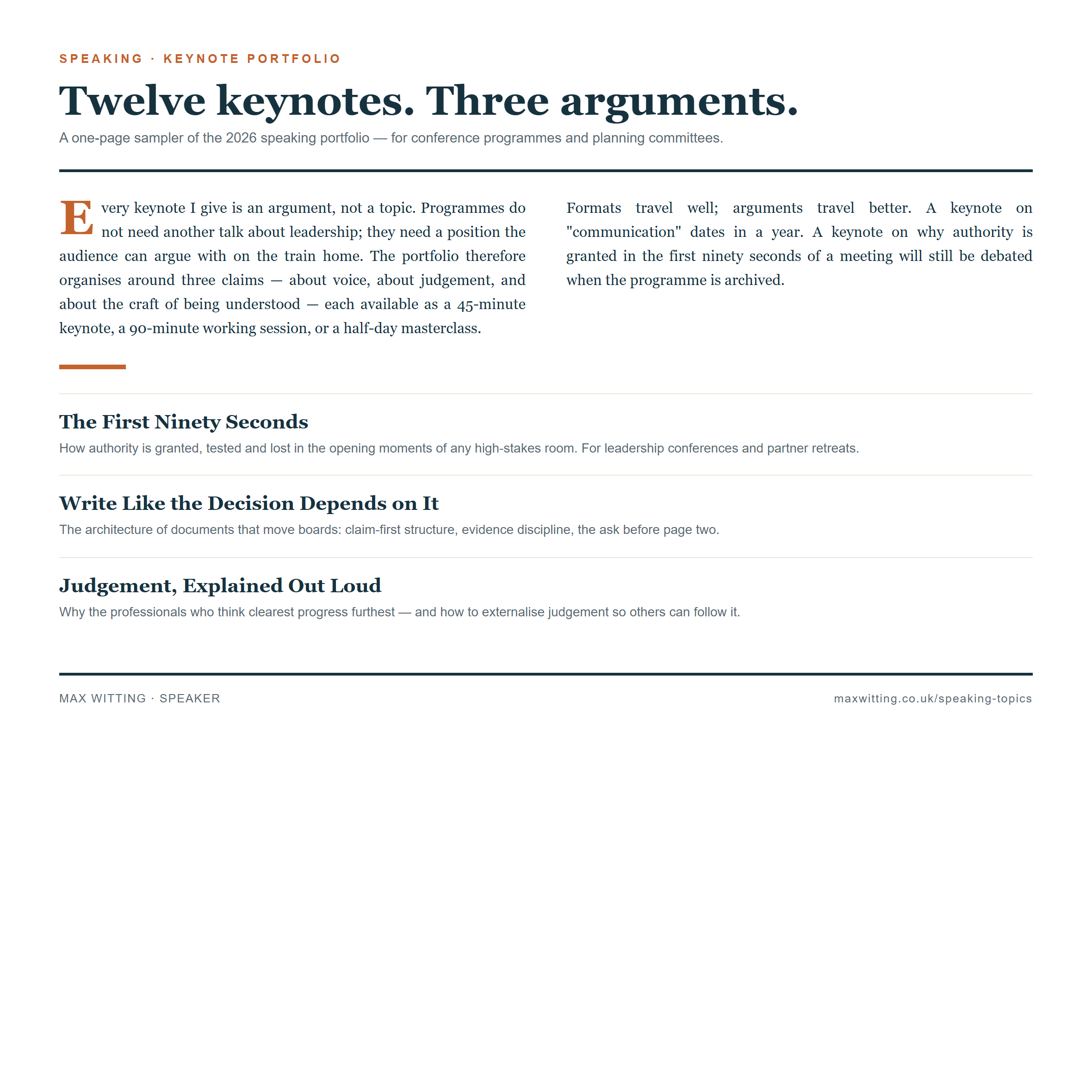
Keynote portfolio sampler
Three arguments, twelve formats, preparation included — the page a programme committee forwardsbefore the call.
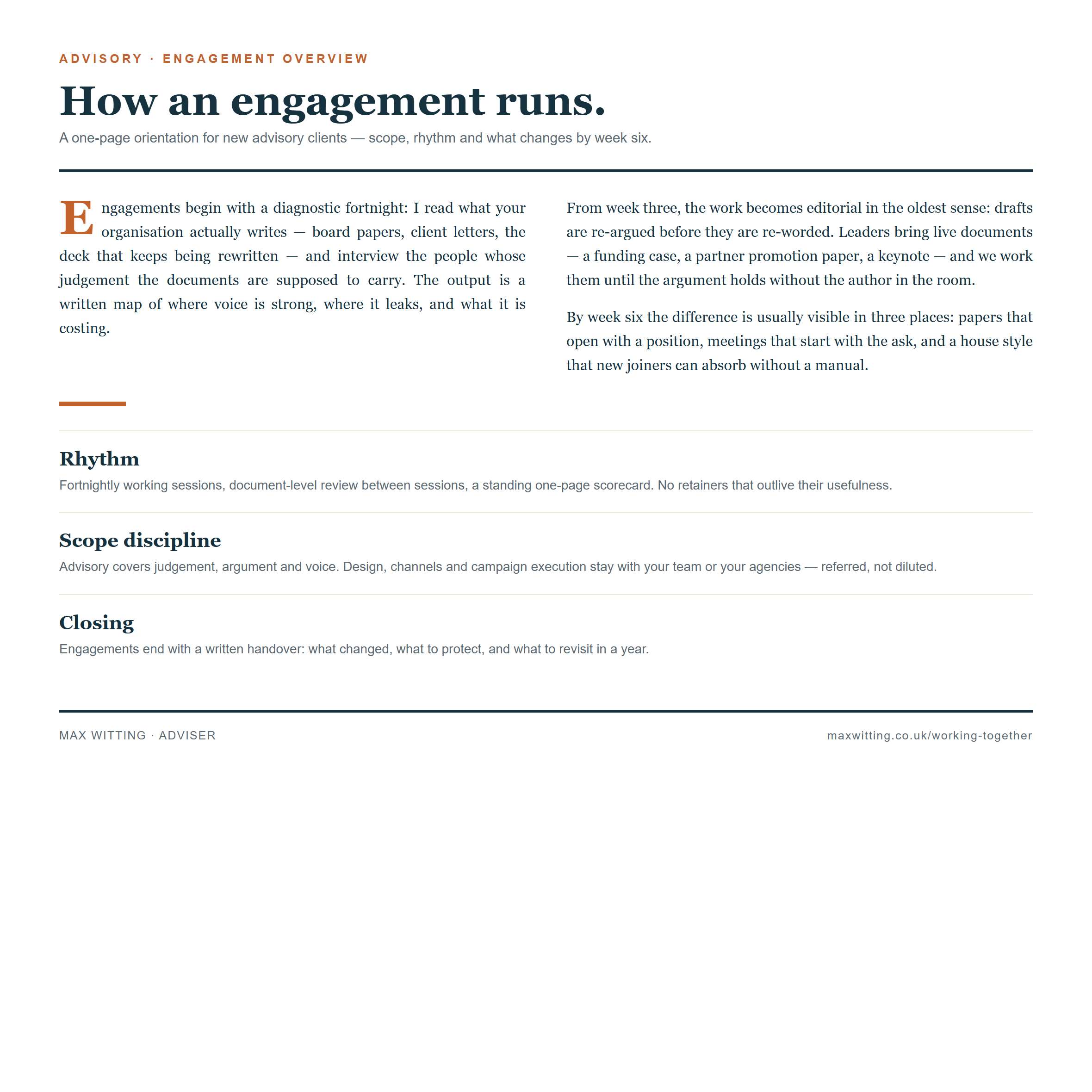
Engagement overview
How an advisory season runs: diagnostic, editorial, handover — the orientation new clients readbefore week one.